
Roofing
The Best Roof Shingles for Jersey Shore Homes (Salt Air & Wind)
By Paragon Exteriors LLC · Updated April 8, 2026
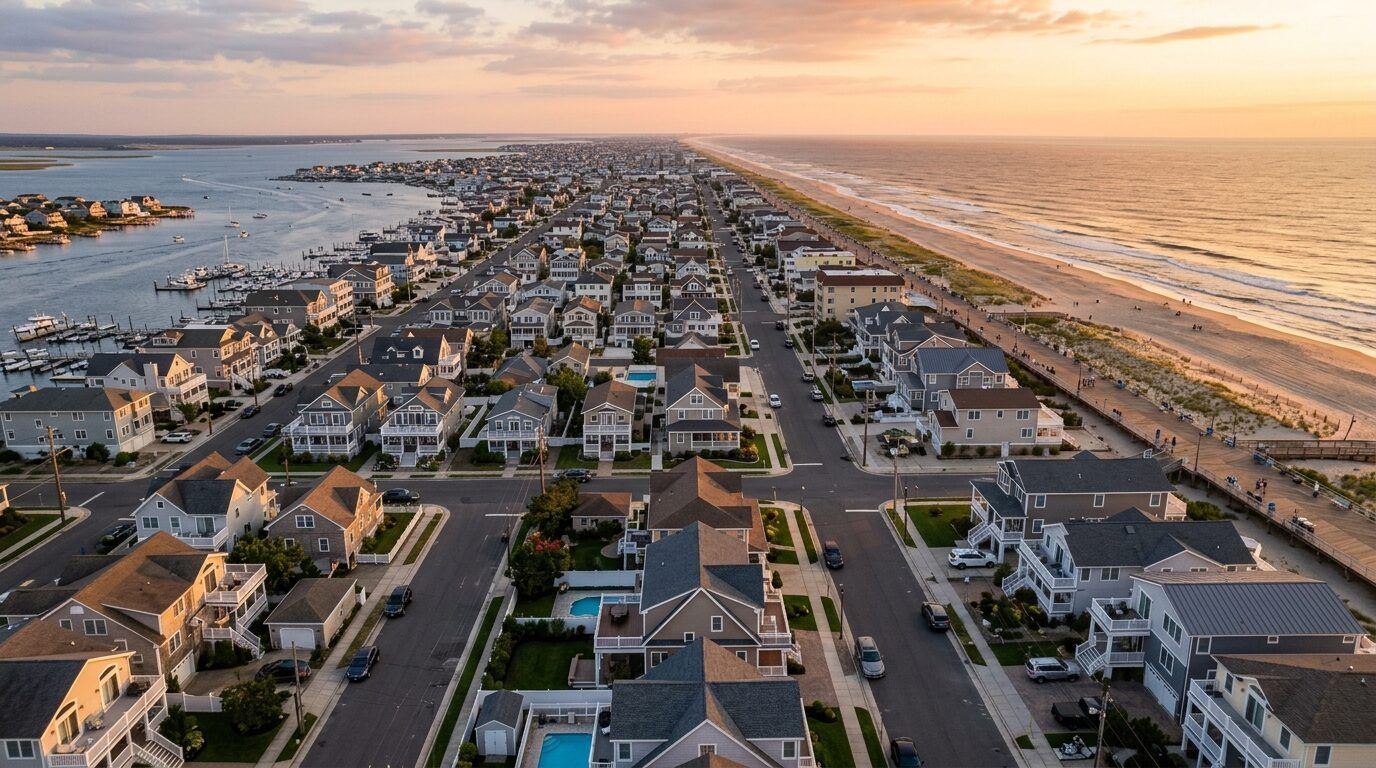
The best shingles for a Jersey Shore home are high-definition architectural asphalt shingles rated for 130 mph wind, with algae-resistant granules and a manufacturer-matched starter and ridge system. In 2026 that means a product like GAF Timberline HDZ, CertainTeed Landmark Pro, or Owens Corning Duration — installed with six nails per shingle and a sealed drip edge. On the barrier islands and bayfront, the installation spec protects your house far more than the brand name does: an inland-spec roof a mile from the ocean is the most common failure we’re called out to fix after a storm.
Here’s how to choose the right shingle for salt air and nor’easters without overpaying for marketing.
Why the Shore is harder on a roof
Roofs in Toms River, Lavallette, and Long Beach Island face four stresses that inland roofs mostly don’t:
- Wind uplift. Nor’easters routinely push 50–70 mph gusts off open water, and hurricane remnants push higher. Uplift peels poorly-nailed shingles from the eaves and rakes first.
- Salt-laden humidity. Salt air holds moisture against the roof longer, feeding algae and corroding cheap fasteners and flashing.
- UV and heat. Reflected light off water and sand ages granules faster on south- and west-facing slopes.
- Wind-driven rain. Rain moving sideways finds any gap in the starter course, drip edge, or ridge — places a calm-weather install gets away with cutting corners.
The shingle you pick has to answer all four, and the fastening pattern has to answer the first one.
The one spec that matters most: wind rating
Shingle wind ratings come from ASTM D3161 and D7158 testing, and they’re only valid when the shingle is installed exactly as the manufacturer specifies — including nail count and starter strips. The rating on the box is a ceiling, not a guarantee.
| Shingle type | Typical wind rating | Best use at the Shore |
|---|---|---|
| 3-tab | 60–70 mph | Sheds and detached garages only |
| Standard architectural | 110–130 mph | Most inland and back-bay homes |
| Architectural + enhanced spec (6-nail, sealed edge) | 130 mph | Bayfront, oceanfront, barrier islands |
| Designer / luxury | 130 mph | Aesthetics-driven upgrades |
For any home within a few miles of the water, we won’t install below the 130 mph enhanced spec. That’s six nails per shingle instead of four, a full starter strip on eaves and rakes, and a properly sealed metal drip edge. It adds a little cost and dramatically changes how the roof behaves in a 65 mph gust.
Brand comparison: the three that hold up here
You’ll hear a lot of brand loyalty. Honestly, the top three asphalt lines are more alike than different when installed correctly. Here’s the straight version.
| Brand / line | Wind (to spec) | Algae warranty | Notes |
|---|---|---|---|
| GAF Timberline HDZ | 130 mph | StainGuard Plus, 25 yr | Largest shingle in the U.S.; fast, consistent installs; LayerLock nailing zone |
| CertainTeed Landmark Pro | 130 mph | StreakFighter, 15 yr | Heavier weight, rich shadow lines; strong dimensional look |
| Owens Corning Duration | 130 mph | StreakGuard, 10 yr | SureNail fabric strip aids fastening; wide color range |
All three are excellent Shore choices. We most often install GAF Timberline HDZ because the nailing zone speeds installation without sacrificing hold — which mattered during our 30-roofs-in-30-days run — but if you prefer CertainTeed or Owens Corning, we’ll spec and install either to the same standard. We are not a Master Elite or exclusive dealer, and we won’t pretend a certification you didn’t need justifies a higher price.
Don’t skip the algae-resistant granules
That black streaking you see on older Shore roofs is Gloeocapsa magma, an airborne algae that thrives in salt-humid coastal air. It’s cosmetic at first, but the darker surface absorbs more heat and speeds shingle aging. Every shingle line above offers a copper- or zinc-infused “algae-resistant” (AR) version with a stain warranty (10–25 years depending on brand). At the Shore, AR granules aren’t an upgrade — treat them as the baseline. The price difference is small; the difference in how your roof looks at year 12 is not.
Color: cooler is smarter near the water
Weathered wood, driftwood grays, and slate tones dominate Shore neighborhoods for a reason — they hide salt haze and read well against sky and water. Beyond looks, a lighter or “cool” shingle color runs a cooler attic in July, which extends shingle life and trims cooling bills. Deep charcoals and blacks look sharp but run hotter; if you love the look, make sure attic ventilation is dialed in to compensate.
What actually makes a Shore roof fail early
The shingle is rarely the villain. In order, these are what we see cut a coastal roof’s life short:
- Under-nailing / wrong nail placement — four nails where six belong, or nails above the nailing zone. The single most common blow-off cause.
- Bad or missing ventilation — a hot, moist attic cooks shingles from below and voids warranties. Intake at the soffits must match exhaust at the ridge.
- Reused flashing — old chimney and wall flashing put back under new shingles. Salt corrodes it; it leaks.
- Cheap starter and drip edge — cutting field shingles for starter instead of using a sealed starter strip leaves the wind an edge to grab.
Get those four right with any of the three brands above and you have a roof that earns its full life. For the bigger repair-or-replace decision, see our guide on repair vs. replacement; for how long you can realistically expect a coastal roof to last, read how long a roof lasts in NJ.
What it costs in 2026
Shingle choice moves the number less than most homeowners expect — labor, tear-off, and roof complexity dominate. As a rough guide on the material line itself:
- Standard architectural (AR): the baseline; included in most roof replacement quotes
- Enhanced 130 mph coastal spec: a modest add for the extra nails, starter, and sealed edge — worth every dollar near the water
- Designer / luxury shingles: add roughly 20–40% over standard architectural
Most single-family Shore replacements land in the $8,000–$18,000 range once everything’s counted. For the full breakdown of what drives that number, see our NJ roof replacement cost guide.
A note on township permits and inspections
Nearly every Ocean and Monmouth County town requires a roofing permit and a final inspection, and coastal towns often reference wind-borne debris provisions in the code. A shingle installed to its 130 mph spec is what lets the roof — and your future insurance claim — hold up under scrutiny. We pull the permit and meet the inspector so the paperwork matches the roof.
Get a real recommendation for your roof
The best shingle for your home depends on your slope, exposure, attic ventilation, and how close you are to the water — a bayfront colonial in Point Pleasant and a wooded ranch in Jackson shouldn’t get the same spec. Request a free itemized estimate and we’ll walk your roof, show you the options side by side, and quote the exact system in writing — no upsell to a certification you don’t need.