
Roofing
How Long Does a Roof Last in New Jersey? Real Lifespans by Material
By Paragon Exteriors LLC · Updated May 15, 2026
The straight answer
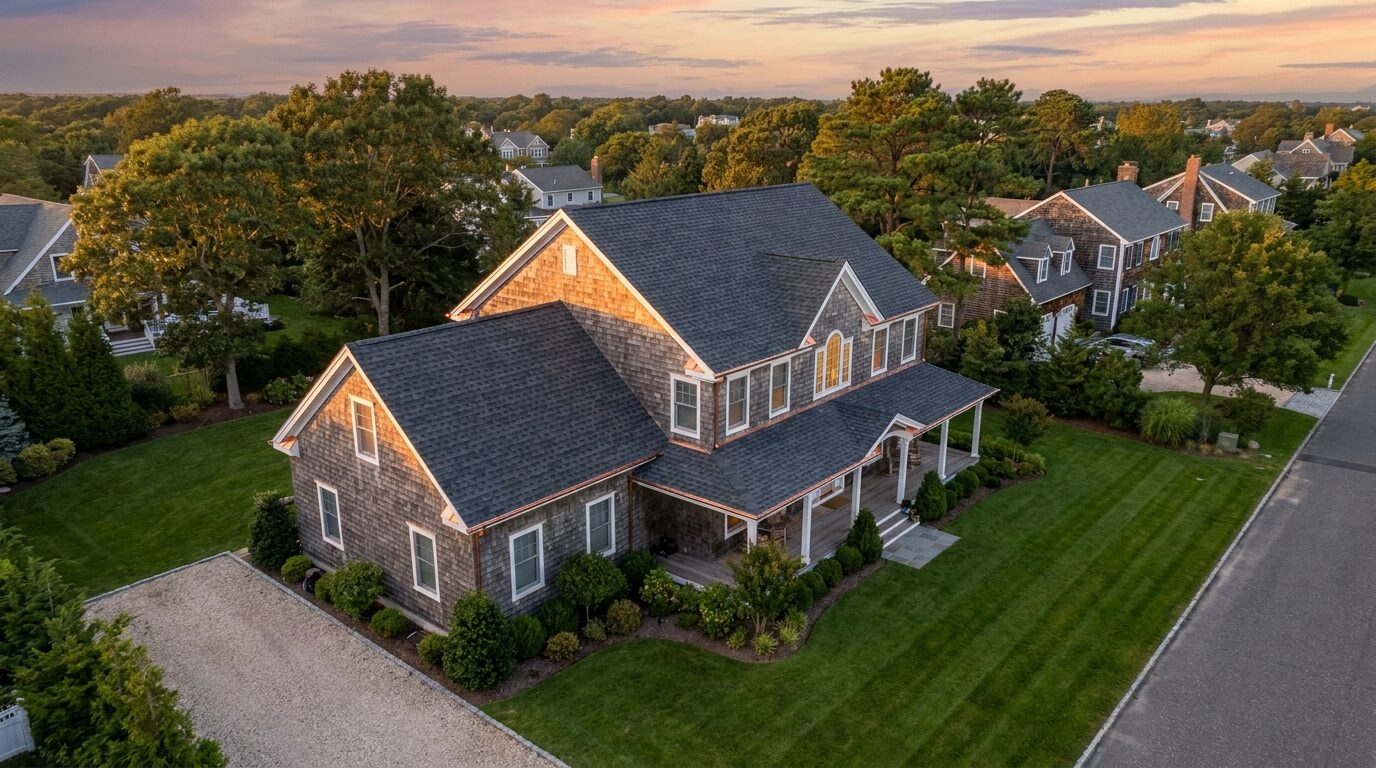
In New Jersey, a 3-tab asphalt roof lasts about 15–20 years, an architectural (dimensional) shingle roof 22–30 years, standing-seam metal 40–70 years, and cedar 20–30 years — assuming a quality install and decent attic ventilation. At the Jersey Shore, subtract roughly 3–7 years from asphalt figures: salt air, reflected UV, and nor’easter wind age a coastal roof faster than the same roof would age in Chester or Morristown. Manufacturers print “lifetime” on the wrapper, but that’s a warranty term, not a service life — the number that matters is how long the roof actually keeps water out.
Lifespan by material (NJ service life)
These are real-world ranges for our climate, not lab numbers. “Inland” means most of Ocean and Monmouth County away from the water; “coastal” means barrier islands, bayfront, and the first mile or two from the ocean.
| Material | Inland NJ | Coastal / Shore | Notes |
|---|---|---|---|
| 3-tab asphalt shingle | 15–20 yrs | 13–17 yrs | The old builder-grade standard; largely phased out for new installs |
| Architectural asphalt | 25–30 yrs | 22–26 yrs | Today’s Jersey default; best value per year |
| Premium/designer asphalt | 30–40 yrs | 26–32 yrs | Thicker mat, better wind rating |
| Standing-seam metal | 50–70 yrs | 40–60 yrs | Coastal needs aluminum or coated steel to resist salt corrosion |
| Cedar shake | 25–30 yrs | 20–25 yrs | High maintenance; moss and rot risk in shade |
| Synthetic slate/shake | 40–50 yrs | 40–50 yrs | Holds up well to salt and wind |
| Flat/low-slope (TPO, EPDM) | 20–30 yrs | 18–25 yrs | Common on commercial and modern additions — see flat roof options |
The takeaway: for a typical Shore home, an architectural shingle roof installed right is a 22–28 year roof. If a contractor promises 40 years from standard asphalt near the water, they’re quoting the warranty, not reality.
Why Shore roofs age faster
Four forces do the damage here, and they compound:
- Salt air carries chloride that corrodes nails, staples, drip edge, and step flashing. When fasteners rust, shingles loosen even while the shingle itself looks fine.
- UV and heat break down the asphalt binder. South- and west-facing slopes, and homes with bright reflected light off water or sand, cook first — you’ll often see one slope fail years before the others.
- Nor’easter wind doesn’t just tear shingles off; repeated flexing at 40–60 mph breaks seal bonds so the next storm lifts them. This is why a roof can look intact and still leak.
- Freeze-thaw and ice dams at the eaves pry at seams every winter. In Toms River, Brick, and the bay towns, that eave detail is where old roofs let go first.
None of this is a reason to overspend — it’s a reason to install to the right spec. A coastal roof built with corrosion-resistant fasteners, six-nail fastening, and sealed edge detail can hit the top of its range instead of the bottom.
How to figure out your roof’s real age
You can’t judge remaining life without knowing where you’re starting. In order of reliability:
- Township permit records. NJ re-roofs require a permit. Your building department can usually tell you the last one pulled — see our NJ roofing permits guide.
- Purchase paperwork. The seller’s disclosure or your home inspection report from closing often lists roof age.
- Prior-owner receipts or a manufacturer warranty registration.
- A roofer’s read of the shingles — granule loss, brittleness, flashing style, and layer count — when no paper trail exists.
The wear signs that mean the clock is nearly up
Age is a guide; condition is the verdict. Start planning for replacement when you see several of these together:
- Granules filling the gutters and bald black patches on the shingles
- Shingles curling at the corners or cracking when flexed
- Daylight, staining, or damp in the attic — especially along the ridge and eaves
- Flashing rust or separated seams around chimneys, walls, and pipes
- Moss or dark streaks on north-facing, shaded slopes
- A “tired,” wavy look across the field from the street
One or two isolated issues on a 12-year roof is usually a repair, not a replacement. Broad wear on a 20-plus-year roof is the opposite — patching just delays the inevitable and adds cost.
How to make a roof last its full life
Two roofs of the same shingle can differ by a decade based on how they’re built and maintained:
- Ventilation is the quiet multiplier. Balanced intake (soffit) and exhaust (ridge) vent attic heat that otherwise bakes shingles from below. Under-ventilated attics are the most common reason a “30-year” roof quits at 18.
- Full tear-off beats a layover. A second layer over old shingles traps heat, hides deck rot, and shortens the new roof’s life — the small upfront saving costs more later.
- Keep flashing and gutters honest. Most leaks start at flashing and clogged gutters, not in the middle of the field. Clear debris and reseal penetrations before they leak.
- Handle small damage fast. A single lifted shingle after a storm is a cheap roof repair today and a deck-replacement job if ignored through a wet winter.
When lifespan becomes a replacement decision
Run the 10-year math. If your roof is past 20 years, showing broad wear, and you’re facing a repair, the repair typically buys 1–3 years — then another follows. Across a decade, replacement is usually the cheaper path once you count repeated patches and interior water damage. For the dollars, see our NJ roof replacement cost guide; when a full replacement is due, our roof replacement service tears off, inspects the deck, and builds to Shore spec — most homes in a single day.
Not sure where your roof stands?
We’ll tell you straight — age, remaining life, and whether you’re looking at a repair or a replacement — with photos and an itemized number, no pressure. Paragon Exteriors is family-run, licensed (NJ HIC #13VH13814500), and fully insured across Ocean and Monmouth County. Request a free inspection or call 848-633-6440.