
Storm Damage
Coastal Roofing 101: Protecting Shore Homes from Nor’easters
By Paragon Exteriors LLC · Updated March 5, 2026
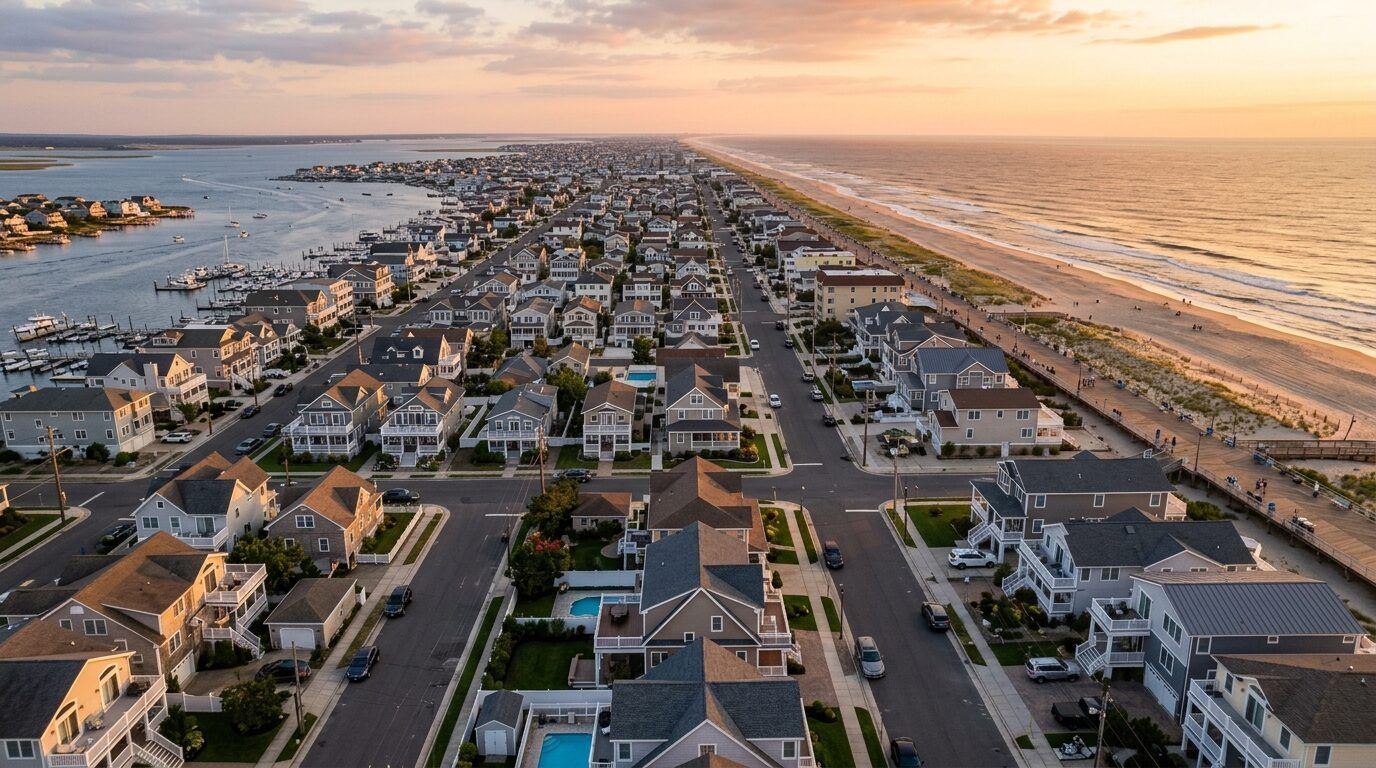
What makes a coastal roof survive a nor’easter
A Jersey Shore roof survives a nor’easter when three things are done right: the shingles are rated for 130 mph wind (ASTM D7158 Class H), every edge is locked down with a sealed starter strip and six-nail fastening, and the metal — flashing, drip edge, fasteners — is corrosion-resistant so salt air doesn’t eat the roof from the perimeter in. Nor’easters rarely fail a roof in the open field of shingles; they fail it at the eaves, rakes, and ridge, where wind gets underneath and peels. Build the edges for uplift and you keep the roof. That’s the whole game, and most re-roofs near the water get it wrong by installing an inland-spec roof a few miles from the ocean.
Why the Shore is harder on roofs than inland Jersey
A roof in Freehold and a roof in Lavallette are not living the same life. Coastal Ocean and Monmouth County roofs face four stresses at once:
- Nor’easters — multi-day storms with sustained 40–60 mph wind and gusts past 70, hitting the same exposure for 24–48 hours instead of a quick summer squall.
- Wind-driven rain — coastal storms push water sideways and up under shingle edges and flashing, so water can enter without a single shingle missing.
- Salt air — chloride in the air corrodes exposed metal continuously, worst within roughly a mile of the ocean or bay.
- Thermal cycling — bright sun off the water plus freeze-thaw winters age asphalt faster than shaded inland roofs.
The result: a coastal roof often loses 3–5 years of service life versus the identical roof built inland, and it fails at the edges and flashing long before the field shingles wear out. That’s why the coastal build is about the perimeter and the metal, not just the shingle you pick.
The coastal wind spec, line by line
Here’s what separates a roof built for the barrier islands from a standard install. When you compare quotes for a home east of the Garden State Parkway, these are the line items to look for.
| Component | Inland-standard build | Coastal / nor’easter build |
|---|---|---|
| Shingle wind rating | 110–130 mph (Class F/G) | 130 mph, ASTM D7158 Class H |
| Field fastening | 4 nails per shingle | 6 nails per shingle |
| Starter strip | Sometimes cut from field shingles | Factory sealed starter on eaves and rakes |
| Underlayment | Synthetic or felt | Synthetic, full deck |
| Ice & water shield | Eaves + valleys | Eaves, valleys, rakes, and all penetrations |
| Drip edge / flashing | Standard aluminum | Aluminum or coated steel, sealed laps |
| Fasteners | Electro-galvanized nails | Hot-dipped galvanized or stainless |
| Ridge cap | Standard cap | Uplift-rated hip & ridge cap |
None of these is exotic, and the total upcharge over an inland spec is usually modest — often a few hundred dollars on a typical roof. The difference shows up once, during the storm that would have peeled the cheaper roof.
What it costs in 2026
Coastal spec does not double your price. For most single-family Shore homes in 2026, a full tear-off and replacement runs $9,000–$18,000, with the coastal upgrades adding roughly 3–8% over an inland-equivalent roof. Barrier-island homes on Long Beach Island and steep or complex bayfront roofs land at the higher end; inland ranches in Barnegat or Manchester sit lower. For a full breakdown of what drives the number, see our NJ roof replacement cost guide.
| Home type | Typical 2026 range |
|---|---|
| Inland ranch / cape (15–20 sq) | $9,000 – $13,000 |
| Coastal colonial, moderate pitch | $13,000 – $18,000 |
| Barrier-island / elevated home, steep or complex | $18,000 – $26,000+ |
The false economy at the Shore is buying an inland-spec roof to save a few hundred dollars, then paying a five-figure interior repair bill after the first bad storm gets under an unsealed edge.
Materials that hold up in salt air
Architectural asphalt shingles remain the Shore workhorse — the right ones, rated Class H, handle nor’easters well and cost far less than metal. If you want to go deeper on brands, our guides on the best shingles for the Jersey Shore and how the major manufacturers compare break down the real differences.
Where salt air matters most is the metal, not the shingle. Cheap electro-galvanized nails and bargain flashing corrode within a few years near the water, and once the flashing fails, the roof leaks even though the shingles look fine. On coastal roofs we spec hot-dipped galvanized or stainless fasteners and aluminum or coated-steel flashing so the metal outlives the shingles. Metal roofing is an option for exposed oceanfront homes — it sheds wind-driven rain beautifully — but confirm the panels and clips are rated and coated for a marine environment.
Before the next storm: a 20-minute homeowner check
You don’t need to climb up. From the ground with binoculars, or from photos, look for the early warnings a nor’easter will exploit:
- Lifted or curling edges at the eaves and rakes — the first thing wind grabs.
- Missing or cracked ridge caps — the highest-uplift zone on the roof.
- Rust streaks from vents, flashing, or fasteners — salt corrosion already underway.
- Daylight or staining in the attic, especially near chimneys and valleys.
- Granules in the gutters — normal in small amounts, a warning if heavy on a roof over 15 years old.
If you see two or more, get an inspection before the season turns. Our guide to the signs you need a new roof covers what’s repairable versus what’s past its life.
After a nor’easter: document, then act
If a storm has already hit, move in order:
- Safety first — stay off a wet or damaged roof; a same-day tarp stops interior damage.
- Document immediately — dated photos of missing shingles, interior stains, and any debris impact, before anything is cleaned up or repaired.
- Get a local inspection before you file — a contractor who knows Shore construction can tell wind damage from ordinary wear and meet your adjuster.
- Don’t sign with storm chasers — out-of-state crews that appear after every big storm often disappear before the first callback.
Sudden wind damage is frequently covered; cosmetic aging is not. If you’re weighing a claim, read our NJ roof insurance claim guide first.
Permits and the barrier-island reality
Shore townships require a construction permit for a roof replacement, and coastal municipalities on the barrier islands often enforce wind-zone fastening requirements at inspection — which is exactly the spec above. We pull the permit and handle inspections as part of every roof replacement, so the paperwork is never yours to chase. For active leaks, our roof repair crew can usually tarp the same day and make a proper fix once the weather breaks, and coastal homes with tired flashing or vents are prime candidates for a storm-damage inspection.
Build it for the water it faces
Paragon Exteriors builds Shore roofs for the storms they’ll actually see — from Point Pleasant to the barrier islands — with coastal fastening, sealed edges, and corrosion-resistant metal as standard, not an upsell. We’re family-run, licensed (NJ HIC #13VH13814500), and fully insured, and we document projects by drone so you can see the spec that went on your roof. Request a free itemized estimate or call 848-633-6440 — we’ll tell you honestly whether your roof needs replacing now or just needs its edges and flashing brought up to coastal spec.