
Storm Damage
Wind & Storm Damage Roof Insurance Claims in NJ: A Step-by-Step Guide
By Paragon Exteriors LLC · Updated June 22, 2026
When insurance actually pays for your roof
In New Jersey, your homeowners policy will pay to repair or replace a roof when the damage is sudden and caused by a covered peril — wind, a nor’easter, hail, or a fallen tree — minus your deductible. It will not pay for a roof that simply wore out with age or was poorly maintained. That single distinction decides most claims: a healthy roof torn up by 60 mph gusts off Barnegat Bay is a covered loss; a 24-year-old roof shedding granules is a denial waiting to happen. Everything below is about proving your claim is the first kind.
Covered vs. not covered — the line adjusters draw
| Usually covered | Usually denied |
|---|---|
| Wind-lifted or missing shingles after a named storm | General age / end-of-life wear |
| Tree or limb impact | Long-term leaks from deferred maintenance |
| Hail bruising and granule loss from a storm | Improper prior installation |
| Wind-driven rain entering through storm damage | Ice-dam damage if excluded by endorsement |
| Sudden structural damage from a nor’easter | Cosmetic-only marks with no leak (some policies) |
The gray zone is where local documentation wins or loses the claim. An out-of-area adjuster who sees a 20-year-old roof will lean toward “wear.” Dated storm reports, matched shingle damage, and interior photos are what move it back into the covered column.
The 5-step NJ claim, in order
1. Document before you touch anything. Photograph the roof, the yard debris, interior water stains, and any date-stamped weather. Note the storm date — NWS advisories for Ocean and Monmouth County are public record and pin your “date of loss.”
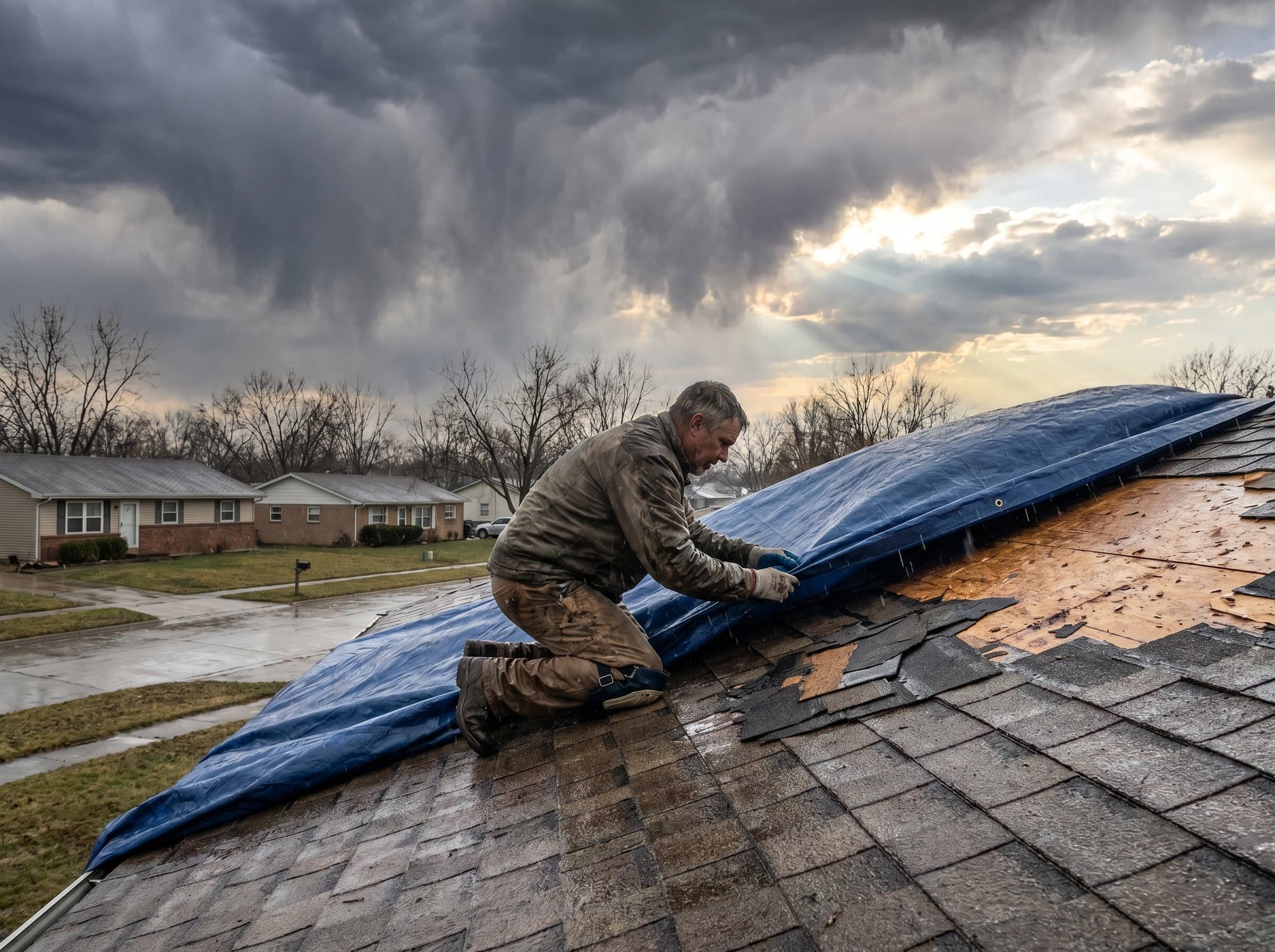
2. Make temporary repairs, keep receipts. NJ policies require you to prevent further damage (tarping, boarding). Insurers reimburse reasonable mitigation costs, but only if you keep the receipts. Do not start permanent repairs yet.
3. File promptly and get your claim number. Call your carrier or use their app. Report the date of loss and the peril (wind, tree, hail). Most NJ carriers expect notice within days; many policies cap wind/storm filing at one year from the date of loss.
4. Meet the adjuster with a licensed local contractor present. This is the step homeowners skip and regret. Have a contractor walk the roof alongside the adjuster so damage isn’t missed and the scope reflects real NJ replacement pricing, not a national estimating average.
5. Review the scope, then complete the work. Compare the adjuster’s line-item scope against your contractor’s. Gaps — flashing, ridge vent, ice & water shield, code-required upgrades — are negotiable with photos and code citations.
ACV vs. RCV: the number that changes everything
How your policy is written matters more than the storm.
| Replacement Cost Value (RCV) | Actual Cash Value (ACV) | |
|---|---|---|
| Pays | Full cost of a new roof | New roof cost minus depreciation |
| Depreciation | Recoverable — released after work is done | Not recoverable — you eat it |
| Your out of pocket | Deductible only | Deductible + all depreciation |
| Common on | Newer roofs, inland homes | Older roofs, many coastal NJ policies |
On a $14,000 roof with a $2,500 deductible, an RCV policy leaves you paying $2,500. The same roof under ACV with 50% depreciation can leave you paying $8,500. Since 2023, more Jersey Shore carriers have shifted older and coastal roofs to ACV-only or added separate wind/hurricane deductibles (often 1–5% of the dwelling value). Read your declarations page now, not after the nor’easter.
The recoverable-depreciation trap
On an RCV claim the carrier issues a first check for the ACV amount and holds back the depreciation until the work is finished and a final invoice is submitted. Homeowners who take a cash settlement and never do the work forfeit that holdback — sometimes thousands. The recoverable depreciation is real money, but only if the roof actually gets replaced and invoiced.
Storm-chasers and the AOB trap
After every big NJ storm, out-of-state crews flood Ocean and Monmouth County knocking doors. The tell is the paperwork: an Assignment of Benefits (AOB) that hands them your claim rights. They then inflate the claim, do minimal work, and vanish before the first callback. Protect yourself:
- Never sign an AOB or “contingency” agreement that transfers policy benefits.
- Verify a real NJ Home Improvement Contractor license (ours is NJ HIC #13VH13814500) and insurance.
- Be wary of anyone who waives your deductible — that’s insurance fraud, and it’s you on the policy.
- Use a contractor who’ll still be here next winter to honor the workmanship warranty.
Deductibles, permits, and the coastal fine print
Two things routinely surprise Shore homeowners. First, wind/hurricane deductibles are often a percentage, not a flat dollar amount — on a $500,000 home a 2% wind deductible is $10,000, which can exceed the roof’s value and make a claim pointless. Second, township re-roofs require permits: Toms River, Brick, and the barrier-island boroughs all inspect re-roofing, and code-required upgrades (ice & water shield, drip edge, ventilation) triggered by the repair are frequently reimbursable under an “ordinance or law” provision — but only if they’re written into the scope. A local contractor knows to ask.
When it’s smarter to skip the claim
If the repair cost is close to or below your deductible, filing can cost you more than it returns — a claim on record can raise premiums or affect renewal at a time when NJ coastal coverage is already tightening. A quick honest inspection tells you which side of the line you’re on. If your roof was already near the end of its life, see how long a roof lasts in NJ and signs you need a new roof before deciding.
How Paragon helps with your claim
We’re a family-run, fully insured local contractor, and storm damage work is core to what we do across Toms River, Point Pleasant, and the rest of Ocean and Monmouth County. We document the damage with drone photos, meet your adjuster on the roof, quote real NJ roof replacement and roof repair pricing, and handle township permits. We don’t take AOBs and we don’t chase storms — we live here. Wondering what the roof itself will run? See our 2026 NJ roof replacement cost guide.
Storm hit your roof? Request a free inspection or call 848-633-6440 — we’ll tell you honestly whether you have a claim worth filing.